


5 Recruitment metrics
Chapter 1 : A word from the author
Recruiting great talent is the foundation of an organisationorganization‘s success, but getting it right can be a challenge. We live in a data-driven age, but many recruiters still rely on their instincts when it comes to hiring decisions. When you consider the high cost associated with recruitment, ignoring data and metrics can be an expensive roll of the dice.
At PageUp we work with organisationsorganizations around the globe to improve their talent management processes with technology. In my role as Head of Customer Insights and Market Research I’ve had the chance to speak with HR leaders to understand their pain points and challenges. One common theme shines through: HR teams aren’t looking at the right recruitment metrics, and as a result aren’t getting the full story. In my work, I’ve uncovered five recruitment metrics HR teams could get enormous value out of, but which many aren’t using.

Why does it matter?
Recruitment is hard to get right, and hiring decisions are too often still made on gut feel. HR experts can lead the way by leveraging data to improve ROI and optimiseoptimize processes.
Time to hire, cost to hire, quality of hire – we’ve all heard of these recruitment metrics before, but should we be focusing on them? In reality, time to hire and cost to hire are blunt instruments that may not offer the insights we’re after: at the end of the day we want the right person in the right role. Does it matter if it takes slightly longer or costs more? The ultimate goal is quality of hire, but this is often impossible to track during the recruitment process.
To attract and recruit top-quality hires, HR practitioners need a recruitment strategy that’s streamlined and optimisedoptimized. The challenge for many organisationsorganizations is drilling down into the numbers and making sense of their recruitment data to determine not just what’s happening, but why it’s happening.
While metrics like time to fill or cost to fill tell you what’s happening, the following metrics are all about answering that ‘why’ question: they tell a behind-the-scenes story of what’s really happening with recruitment at your organisationorganization.
How mature are your metrics?
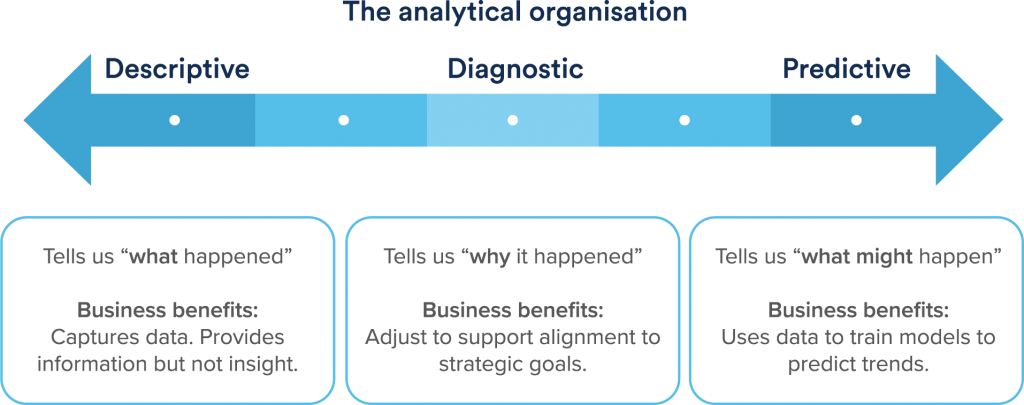
How mature is your organisationorganization’s analytics? Most organisationsorganizations sit in the descriptive stage, where they can capture data and provide information on what’s happening in their recruitment activities – but can’t say why it’s happening. OrganisationsOrganizations that can diagnose why things happen are able to adjust their approaches and meet strategic goals. OrganisationsOrganizations with the most sophisticated recruitment approaches can leverage their data to predict future trends and shape their HR strategy.
So what metrics should savvy HR practitioners pay attention to? I recently worked with organisationsorganizations to help them understand what’s driving their recruitment results. Armed with these insights, the organisationsorganizations identified which activities were adding real value – and which weren’t.
In the process, I discovered five recruitment metrics that deliver enormous value, but which are underutilised. In this ebook I explore each metric and how to use it.
Rebecca Skilbeck
Head of Customer Insights & Market Research, PageUp

Chapter 2 : Offer acceptance rate

Why does it matter?
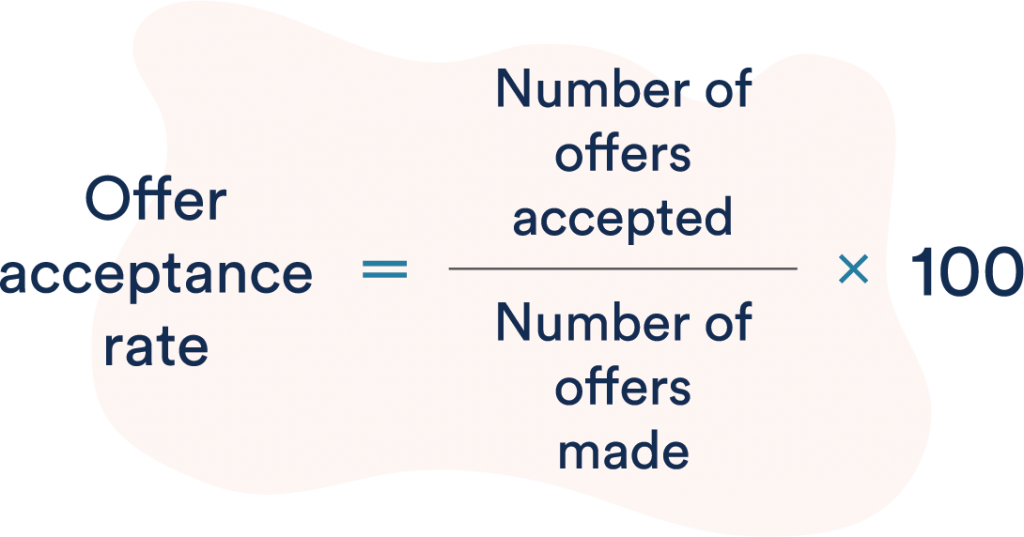
Tracking and improving offer acceptance rates can save an organisationorganization’s time and budget. Recruiting is expensive and each candidate that turns down a job offer costs your organisationorganization money. High-performing organisationsorganizations average a 99% offer acceptance rate each year, while the industry benchmark sits at 94%.
You go to a lot of effort to find ‘the one’ – the candidate that is the right fit for your organisationorganization. They’ve been screened, interviewed, tested and background checked. They have the skills, experience, attitude and cultural alignment that you want. But do they want to work for you? Tracking your offer acceptance rate will help you understand how you’re performing. As talent acquisition professionals, knowing whether you’re tracking well, and exploring why is of real strategic value to your senior leadership team.
PageUp research has found the average offer acceptance rate across all industries globally is 94%. Top-performing organisationsorganizations average 99% each year. If your offer acceptance rate is less than 95% it’s worth considering why. Talent acquisition professionals often have an understanding of why candidates are not accepting an offer, but most don’t track reasons formally, and so can’t answer the question conclusively. It’s important to understand why candidates don’t accept offers and to start taking proactive steps to improve offer acceptance rates.
If your offer acceptance rate is below the industry benchmark, ask yourself:
- Are you an employer of choice?
- Is your compensation competitive?
- Did something happen during the recruitment process?
- Is your recruitment process fast enough to secure talent?
PageUp research has found the average offer acceptance rate across industries is 94%. Top performing organisationsorganizations average 99% each year.
Rebecca Skilbeck, Head of Customer Insights & Market Research, PageUp
Real life learnings
Is your offer acceptance rate acceptable?
To identify opportunities for improvement, I took talent acquisition professionals at two organisationsorganizations through their current offer acceptance rates.
The first team had an ‘aha’ moment when they calculated a total of 112 declined offers year-to-date. This prompted a team brainstorm session to understand why the rate was so high, and they then collaborated on ways to bring that number down in future.
The second organisationorganization initially felt that their offer acceptance rates were in line with their expectations. However, when their results were compared to the industry benchmark, not only did they rank below their industry – they also ranked below the average for all industries. Again, a quick brainstorm session helped the team identify three hypotheses for the causes of their low ranking, and what they might do to correct it.
Insights are only as good as the data
Another organisationorganization was experiencing phenomenally high offer acceptance rates. The team drilled down into why this was happening and quickly realisedrealized they were only progressing candidates to a formal offer after receiving a verbal acceptance. This meant they weren’t capturing verbal offer decline rates, thus skewing their offer acceptance rates. To get an accurate measure, it’s crucial to capture all of your data, from all sources.
Is your recruitment process fast enough to secure talent?
One organisationorganization I worked with kept losing high-quality candidates at the last stage of the recruitment process. To figure out why this was happening, they drilled down into their recruitment data to find the bottlenecks and pain points in the process. Doing so told them they were offering jobs and intake opportunities too late, and as a result were losing candidates to other companies who were able to start the intake sooner. They were then able to use that data to redesign their recruitment approach and make offers at the right time.
Improving employer brand can improve your offer acceptance rate
If you feel you are not an employer of choice, you need to understand why. Often, it’s a case of improving your employer brand. To recruit top talent it’s imperative to have a strong employer brand: 72% of recruiting leaders worldwide agree this has a significant impact on hiring. If you don’t, it pays to investigate why.1
Location, location, location
An organisationorganization in a remote, less-desirable location was faced with the challenge of attracting candidates. What was their approach to get people over the line? They went above just selling the current role: they sold candidates a future with the organisationorganization. It pays to emphasise ongoing career opportunities as part of the recruitment process to attract candidates, not just to the current role, but their potential future career at that organisationorganization.
Discuss salary early
Another organisationorganization was losing high-quality candidates during the application process because of a lack of communication around benefits. Candidates were progressing to the final offer stages without understanding the full remuneration and benefits package – then turning down offers if these were not in line with their expectations. This practice not only wasted valuable time and delivered a poor candidate experience, but also had the potential to damage the employer brand. It’s crucial for candidates to understand salary and benefits early in the recruitment process. Once you understand your offer acceptance rate and fill any gaps in your current processes, it’s important to track it over time to see how you’ve progressed.
Chapter 3 : Applicant to hire rate
Why does applicant to hire rate matter?
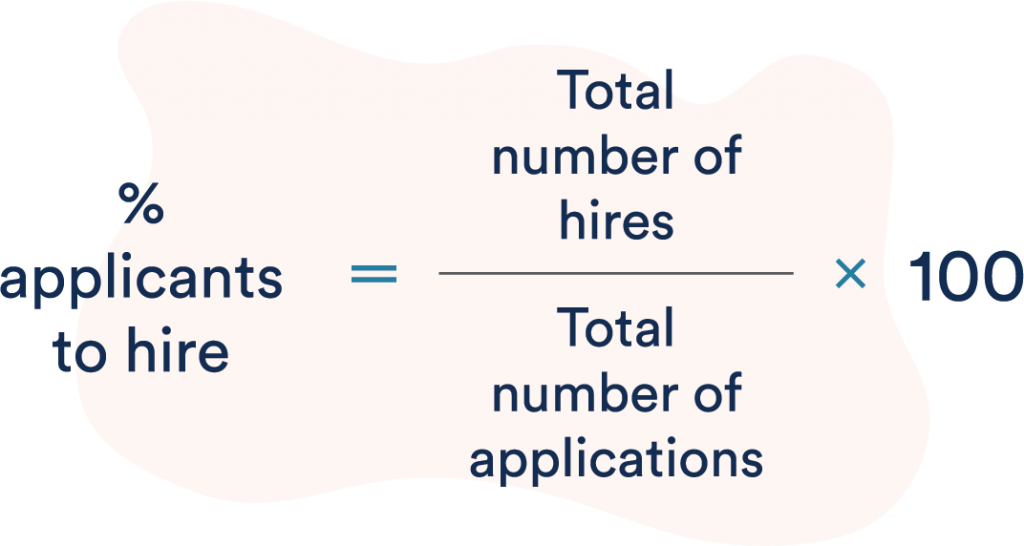
This metric tells an important story about the effectiveness of your job listings. We all want a rich pool of applicants to select from, but none of us want to wade through more applications than necessary. Tracking applicant to hire rate can show whether job ads are reaching and engaging the right audience.
How many applications do you need to find a qualified candidate? Too many applicants can create unnecessary work, while too few can limit your ability to find the best people. How many applications do you need to secure a hire? If you don’t have this data to hand, it’s easy to either leave positions open for longer than necessary or close them too early.
PageUp research tells us that for every 100 applications received, four people are hired. In other words, it takes 25 applications to secure one successful hire. The exact numbers vary based on the industry: Higher Education hires 8% of applicants whereas Retail only hires 3% of applicants. Finance comes in at the overall average of 4%.
If your applicant to hire rate differs from the industry benchmark, ask yourself:
- Are your job ads reaching and engaging the correct audience??
- Is your compensation competitive?
- Is your recruitment process fast enough to secure talent?
If you’re receiving too many or too few applications for the roles you post, there are a number of factors you can examine. If you’re an employer of choice, a high volume of applications is to be expected. If you aren’t, and you’re still receiving high volumes of applications, your job ads may not be targeted enough. One way to address this is by adding screening questions at the start of application forms to remove unsuitable applications.
Check the wording of your job listings for bias, or inaccurate descriptions of the required skills and competencies. If you’re not receiving the number of applications you require, consider leaving your listings open for longer, and posting on additional job boards and social media channels.
A frustrating candidate experience affects the volume of applications you receive. If an application form is too long or unwieldy, many jobseekers will abandon the application before completion. To increase the volume of applications you receive, consider revamping your careers site to showcase your employer brand and simplify the online application process.
To increase the volume of applications you receive, consider revamping your careers site to showcase your employer brand and simplify the online application process.
Rebecca Skilbeck, Head of Customer Insights & Market Research, PageUp
Real life learnings
Testing shorter position openings
One organisationorganization saw success after trialling shorter position opening times. While the volume of applications they received were lower, the quality of applications and offer acceptance rate remained unchanged. Qualified candidates were surfaced much faster, which improved time to fill and hiring manager engagement.
Are your job ads effective?
One business examined their applicant to hire ratio and discovered their lack of female applicants was partly due to job listings that carried unconscious bias in their wording. The organisationorganization is now working on a style guide for its recruiters using tools that remove gender bias from ads. What’s more, the hiring team is proactively targeting female applicants in their job listings, informed by the recruitment data they’re leveraging.
Chapter 4 : Candidates to hire rate
Why does candidates to hire matter?
A low candidate to hire rate can cost an organisationorganization hundreds of thousands of dollars in recruitment fees and negatively impact employer brand.
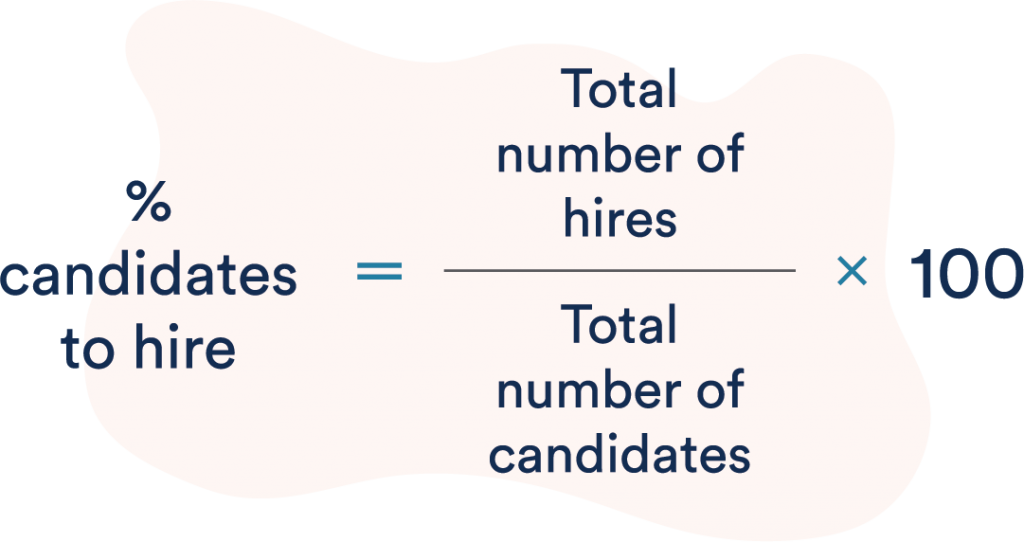
The term applicants refers to everyone that has applied for the role, regardless of whether or not their experience, skills or behaviours match the job requirements. As you move further down the recruitment funnel, non-suitable applicants are screened out, leaving candidates that match the role requirements and have the experience, skills and behaviours that indicate they may be a good fit for the organisationorganization.
Out of this pool of potential candidates an average of 9% successfully land the job, according to PageUp research. This means on average nine candidates out of 100 are hired and 91 are unsuccessful. These figures vary from industry to industry: Higher Education hires 19% of these qualified candidates, whereas Retail only hires 7%. Finance comes in closer to the overall average at 10%.
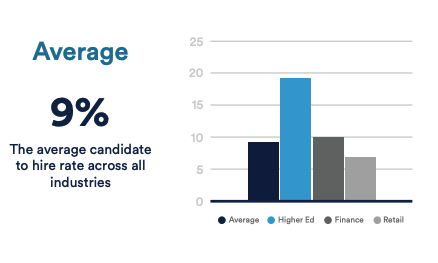
When your candidate to hire rates are lower than these industry benchmarks, it means you’re saying no to more people. You’re taking a large number of candidates through your recruitment process, which is obviously labour-intensive and costly, and it can also mean you’re not engaging your silver medallist talent. A robust screening process that identifies highly suitable candidates early on is crucial to cut down the time and cost to hire, and to maintain hiring manager engagement.
Silver medallist candidates are those that made it all the way through to the last stages of the hiring journey in the past. Are you still in touch with them? They should be in your talent pool so that next time you can present star candidates straight away.
Having a high volume of unsuccessful candidates can impact your employer brand: maintaining a high-touch approach and adequate candidate care is difficult across large cohorts. Today’s candidate may be also your customer tomorrow. If they don’t have a good recruitment experience with you, will they want to work for you or buy from you in future, or will they go to a competitor?
Having a high volume of unsuccessful candidates can potentially impact your employer brand: maintaining a high-touch approach and adequate candidate care is difficult across large cohorts.
Rebecca Skilbeck, Head of Customer Insights & Market Research, PageUp
If your candidate to hire rate is lower than industry benchmarks, ask yourself:
- Are you regularly seeing a high volume of unsuccessful candidates?
- Are you maintaining a high-touch approach to candidate care?
- Are you effectively using talent pools and engaging ‘silver medallist’ candidates?
Real life learnings
Engaging ‘silver medallists’
PageUp research shows only 43% of organisationsorganizations have well-established talent pools equipped to meet the future needs of their company. One organisationorganization found they were not using talent pools effectively, and this prompted them to think about those ‘silver medallist’ candidates – the second-in-line candidates who just missed out on a role. It’s imperative to keep these highly-qualified candidates nurtured in talent pools. The team discussed how this practice could save them time and money when it came time for the next round of recruiting.
Chapter 5 : Sourcing channel effectiveness
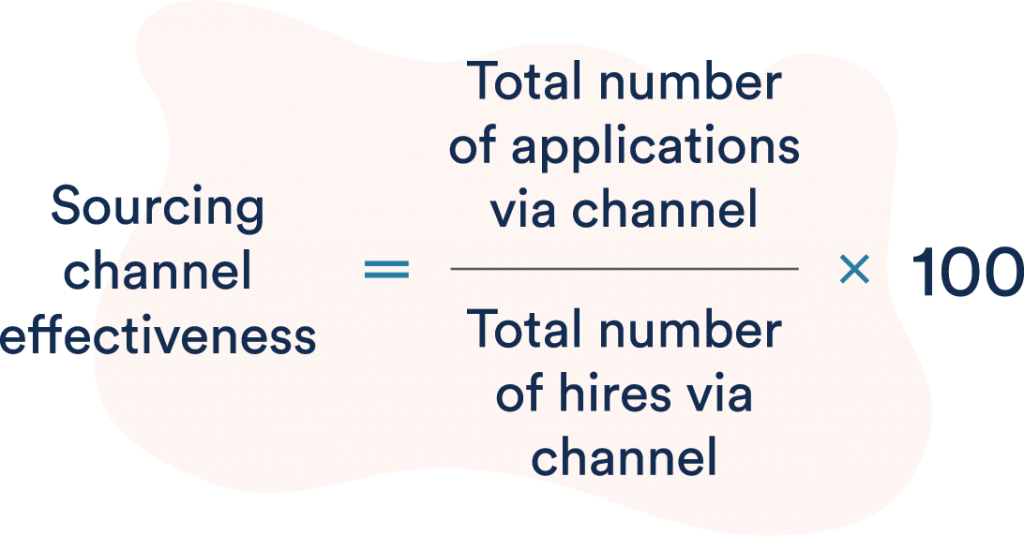
Why does sourcing channel effectiveness matter?
Measuring sourcing channel effectiveness tells you which sourcing channels are working, and which need to be reconsidered. This can result in significant savings.
Where do the best quality candidates come from? Being able to answer this question is vital to optimising sourcing efforts. There’s a difference between knowing where applications are coming from and which channels are most effective in attracting applicants which go on to be high-quality hires, yet many recruiters are still relying on gut feel to determine the effectiveness of each sourcing channel.
Understanding the most effective source of talent for your organisationorganization ensures the best ROI on time and financial investment spent on recruiting. Knowing this information helps you create targeted, results-driven recruitment campaigns. For example, PageUp research has found that 26% of applications and 17% of hires come via a company’s careers website. Compare this to employee referrals: even though only 3% of applications come from employee referrals, these applications account for 9% of a company’s overall hires. That means employee referral is 4.3 times more effective in finding suitable hires than a company’s careers website.
Employee referral is 4.3 times more effective in finding suitable hires than a company’s careers website.
Rebecca Skilbeck, Head of Customer Insights & Market Research, PageUp
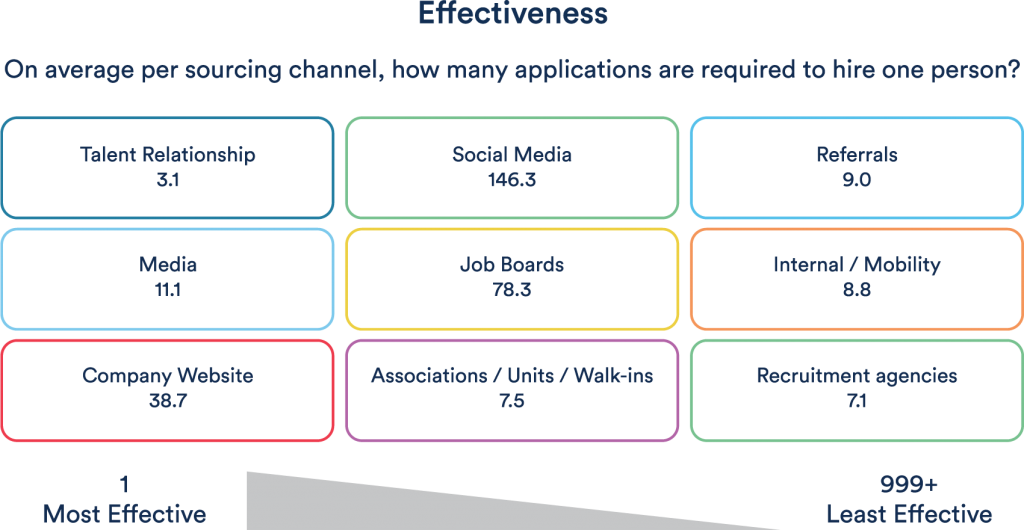
Do you know the effectiveness of your sourcing channels? Ask yourself:
- What are our main sourcing channels?
- Where do the most applicants come from?
- Where do the most hires come from?
- What is the cost per hire per channel?
- How should our sourcing channel strategy change based on this?
Real life learnings
Gut feel
One organisationorganization had in-depth information about its sourcing channels and the volume of applicants each received. But when asked about the effectiveness of each channel, recruiters were still going off gut feel. After realising they lacked information about the effectiveness of their sourcing channels, they set to work tracking these metrics to inform their resourcing strategies and recruitment marketing plan.
Chapter 6 : Mobile applications and time to apply rates
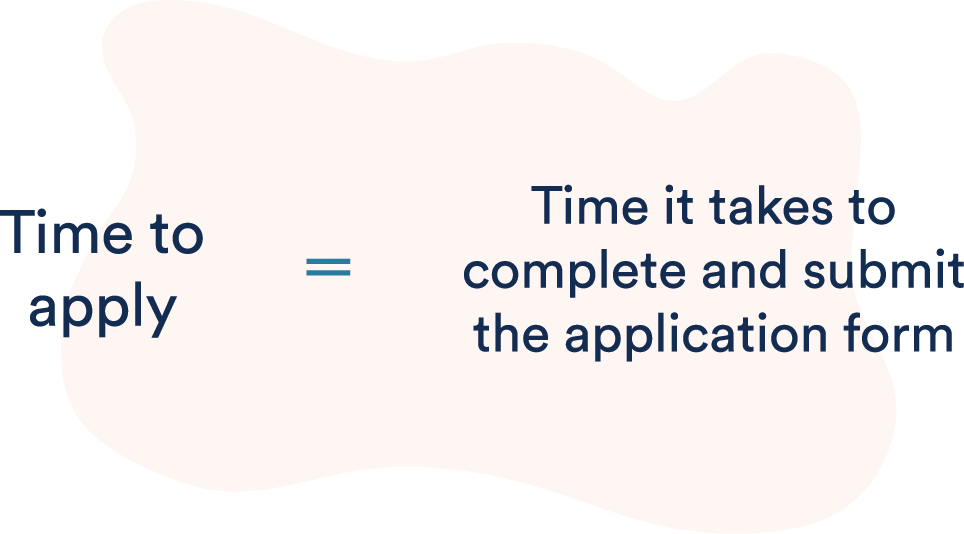
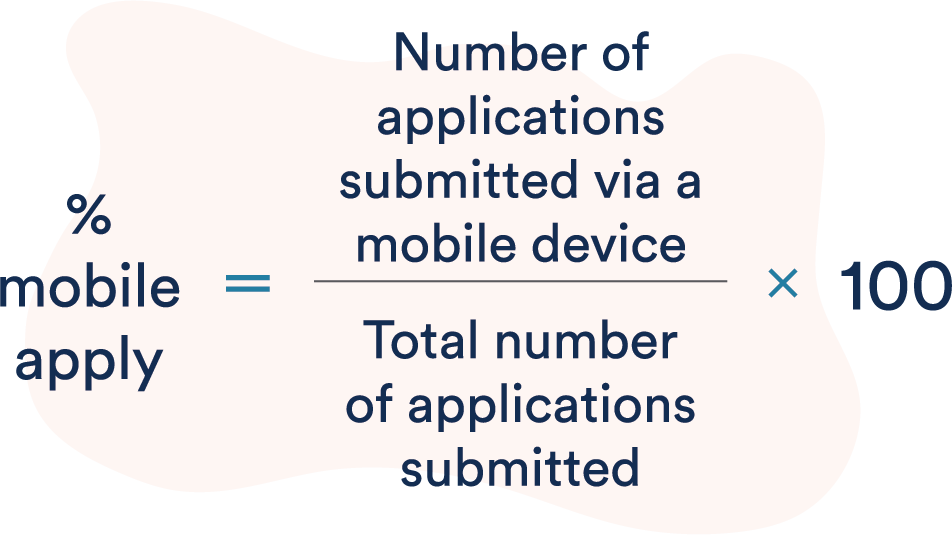
Why does it matter?
The trend towards mobile adoption isn’t slowing down, and companies need to deliver consumer-grade recruitment journeys to speed up the application process and attract top talent.
Mobile applications and time to apply rates are two separate metrics, but they work together to tell a story that might otherwise be overlooked. There are several converging trends driving the adoption of mobile-optimisedoptimized recruitment.
|
OrganisationsOrganizations are expected to deliver a consumer-grade experience with seamless connectivity for all aspects of the recruitment process. |
Baby boomers are retiring and millennials will make up 75% of the workforce by 2025.2 |
Smartphone adoption rates amongst casual, remote and blue collar workers are increasing. |



In response, many organisationsorganizations have optimisedoptimized their careers websites and recruitment processes to be compatible with mobile devices. But are you measuring the uptake of mobile functionality? If it’s lower than expected, do you understand why?
Are your mobile application and time to apply rates in line with industry standards? Ask yourself:
- Is your careers site mobile-optimisedoptimized?
- Do you offer applicants the opportunity to pre-fill from social sites/CVs?
- Are your job application forms suited to mobile usage?
In the past year 19% of applications were submitted via a mobile device, according to PageUp research. That’s up from 15% at the end of 2017, and notably higher than the external benchmark of 16%. PageUp research has also found that there is a correlation between abandoned job applications and applications made on a mobile device. As the application form lengthens, the number of incomplete applications via mobile devices increases. Lengthy job applications become tedious on these devices, applicants give up and they don’t complete the application. This doesn’t happen as often on desktop – although lengthy application forms are not recommended on any device.
If you’re looking to optimiseoptimize your mobile recruitment approaches, make it simple and easy for jobseekers to apply on-the-go. Consider allowing candidates to attach their resume or autofill applications from their social media profiles.
Candidates expect to search and apply for jobs from their mobile devices. This is especially important in industries that have low desktop usage for example: Retail, Healthcare, Mining, and Manufacturing. Consider enabling desktop-standard search and application functionality from mobile devices. If jobseekers find the application process frustrating, they may choose another employer who matches their technology expectations.
Knowing which recruitment metrics to track helps you identify the most effective ways to attract the best talent.
Learn more about our powerful talent management technology at pageuppeople.com


